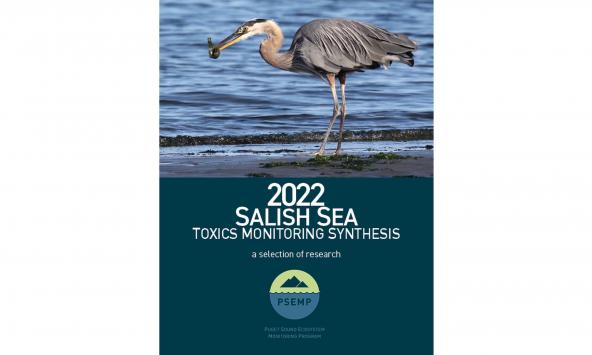
Data collected in 2022 was published in 2023 in the Salish Sea toxics monitoring synthesis: A selection of research. The Puget Sound Ecosystem Monitoring Program (PSEMP) Toxics Workgroup has published two previous reports in 2016 and 2018. The key messages of the report are:
- “Some contaminants impact the health and safe consumption of fish and shellfish, particularly benthic species in urbanized areas, and pelagic fish from throughout Puget Sound. Persistent legacy contaminants, such as PCBs, are still widespread and cycle through the pelagic food web. PBDEs have been declining but are still affecting juvenile salmon in the Snohomish and Puyallup basins.
- A number of regional monitoring groups are providing important exploratory and baseline data on legacy and emerging contaminants potentially impacting Orca and their main food source, Chinook salmon.
- Although Puget Sound nearshore sediments are relatively clean, mussel tissue monitoring shows higher contamination in urban centers. Temporal trends of legacy contaminants in mussel tissues show an overall decrease in concentrations from 2017/18 to 2019/20.
- Contaminants in roadway and stormwater runoff negatively affect the health of salmon and forage fish. More is being learned about the toxic effects and treatment of tire wear particles and 6PPD-quinone. For example, bioretention using soil-based media is a highly effective means of protecting biota from contaminant exposure and impacts.
- Laboratory studies indicate that wastewater treatment plant effluent could cause adverse effects in fish where it enters the Salish Sea.
- CECs, including pharmaceuticals and personal care products, have been detected in Salish Sea waters, and some like PFAS are being found widely in freshwater. Some of the CECs occur at levels high enough to harm fish and wildlife.”
Findings support the need for inter-agency, government, community, and organizations to encourage and participate in the prevention, expedient treatment, and education of contaminants in our watershed. You can help by taking toxic materials to a hazardous waste center instead of pouring them on the ground or in a drain, avoiding landscape plants that require pesticides and fertilizer which can contaminate water sources, selecting pervious surfaces for landscaping to prevent runoff, and reporting problems when you see them. In Pierce County toxic spills and water pollution can be reported through Surface Water Management at (253) 798-4274 or the PC online reporting form. Contact the Chambers-Clover Creek Watershed Council if you have stories to share about cleanup efforts or needed interventions.
 cloverchamberscreekwatershedcouncil.blog