The CCWC focuses on urbanization as a theme for the 2024 issues forum and topics for investigation and discussion at our monthly meetings on the 3rd Wednesday of every month from 3:30 to 5:30 PM via Zoom. Throughout the year, the CCWC blog will share information about urbanization and things you can do to improve our watershed health. This post provides an overview of urbanization and impacts on our watershed.
The Environmental Protection Agency (EPA) defines urbanization as “the concentration of human populations into discrete areas. This concentration leads to land transformation for residential, commercial, industrial, and transportation purposes. It can include densely populated centers and their adjacent peri-urban or suburban fringes.” There are many different ways to define and describe the impacts of urbanization on various parts of the environment. However, urbanization effects on water are critical, under-reported, and at least partially avoidable.
Urbanization can threaten waterways and our watershed’s health as development increases throughout Pierce County, manifesting in increased urban density (increased man-made structures with impervious surfaces) and diminishing open spaces (needed for stormwater management and aquifer recharge). The CCW is dependent on groundwater stored in our primarily shallow sole-source aquifer system. Riparian areas are particularly stressed by development. Washington Fish & Wildlife defines a riparian area as one that consists of “elements of aquatic (water) and terrestrial (land) ecosystems. The interactions between water and land create an environment that is critical to the survival and existence of land-based and aquatic species. Known for their moist and mild microclimates, riparian areas have fertile soils that enhance plant growth and support complex food webs.” According to the Government of British Columbia, riparian areas are critical to watershed health because they can
- help trap sediment that can alter or impede water flow, and a healthy water habitat
- help build and maintain stream beds.
- store floodwater and energy that can result in erosion.
- recharge groundwater.
- filter and buffer water.
- reduce and dissipate stream energy.
- maintain biodiversity.
Healthy riparian areas, a core component of our watershed, can improve water quality and quantity, strengthen the function of our waterways, help prevent flooding, an contribute to a biodiverse ecosystem.
During 2024, urbanization is a watershed priority because Pierce County is updating its Comprehensive Plan, required by the state’s Growth Management Act (GMA). The process must be completed by December 31, 2024, and will be in effect for 20 years (with 10-year updates). A core piece of the 2024 updates is the Critical Areas Ordinances (COA) update, which involves water quality, management, and quantity. Each CAO (in image below) is connected to riparian areas, and there is a need to preserve, restore, and conserve these sensitive environmental areas to avoid watershed and other environmental challenges in the future.

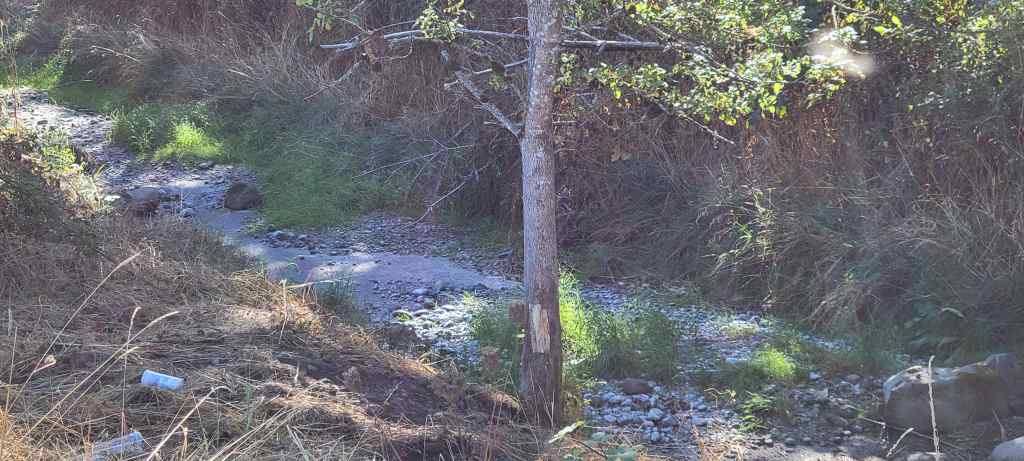
Some of the Chambers-Clover Creek Watershed creeks, such as much of Chambers Creek, are evidence of successful preservation and restoration strategies. However, others exemplify endemic problems that have resulted in an unhealthy water system. Clover Creek embodies the poor health compounded by its flow through multiple municipalities – Fredrickson, Spanaway, Parkland, Joint Base Lewis-McCord, and Lakewood. Shared jurisdiction between the county and the municipalities (three in unincorporated) presents unique challenges for monitoring and aacting to improve the creek. For the past five years, Clover Creek water flow has been seasonal. Water flows only after rain events, thus having a temporary connection to groundwater. Some parts of the creeks only pour during our rainiest months. By Washington State law, local governments are obligated to monitor and improve creeks that are not flowing. Because so much of the creek-side property in the CCW is privately owned, the lack of flow has not been adequately observed, documented, and understood.
We can all observe and speak out when we recognize problems. Problems and pollution can be quickly reported to Pierce County Surface Water Management.
Report A Problem Form: Fill out our online form to report problems related to stormwater or flooding. You may also call (253) 798-6000.
Report Water Pollution: Fill out our online form to report problems related to water quality or water pollution. You may also call (253) 798-4274.
References
Environmental Protection Agency. Urbanization. Causal Analysis/Diagnosis Decision Information System (CADDIS), V. 2. https://www.epa.gov/caddis-vol2/urbanization-overview
Environmental Protection Agency. Urbanization – stormwater runoff. https://www.epa.gov/caddis/urbanization-stormwater-runoff
Government of British Columbia. (2019). Riparian management – field workbook. https://www2.gov.bc.ca/assets/gov/farming-natural-resources-and-industry/agriculture-and-seafood/agricultural-land-and-environment/environmental-farm-planning/riparian_management_field_workbook.pdf
Washington Department of Fish & Wildlife. Riparian areas. https://wdfw.wa.gov/species-habitats/ecosystems/riparian#desc-range
 cloverchamberscreekwatershedcouncil.blog