The CCWC’s mission is to promote the protection and enhancement of the Chambers-Clover Creek Watershed. To this end, we collaborate with municipalities, organizations, agencies, and individuals to identify issues, make public critical concerns, and promote effective watershed practices. With the authority of inter-organizational work, we strive to improve, enhance, and safeguard water quality and quantity, responsibly manage and preserve water resources, and proficiently oversee inland water bodies and shorelines. We must collaborate harmoniously. Dr. Derek Faust’s (Co-Chair, CCWC, and CPPC faculty) April 3, 2024, presentation highlighted current watershed issues and priorities to the City of Lakewood’s Planning Commission. Our collective effort is aimed at guaranteeing that the City of Lakewood maintains an optimal balance between the quantity and quality of water to sustain our community and the delicate equilibrium of the natural environment. This post summarizes and builds on Dr. Faust’s main points and identifies immediate steps that can and should be taken.
Lakewood has authority over multiple bodies of water that require action. The City oversees parts of Clover Creek, Flett Creek, Ponce de Leon Creek, Leach Creek, and Garrison Creek. It also oversees 11 lakes: Gravelly, Steilacoom, American, Waughop, Wards, Louise, Lost, Lorrai Pond, Seeley, Carp, and Boyles. Yet Lakewood has no agency or individual to directly manage its waterways. Over the past five years, citizens and volunteers have reported dry creeks throughout the city, as well as other impediments to water flow, including trash, barriers (fish ladders, damns, bridges, walls), pollutants, and infestations of non-native invasive plants. Lakewood volunteers have not monitored lake water levels and quality since Pierce Conservation District closed its volunteer-based data collection in 2021 with a final report, and the Pierce County Health Department began to limit lake water testing in 2022. Thus, information about water health is limited. Oversight is compounded by the fact that most shorelines are privately held; therefore, there is restricted access to observe and document problems.
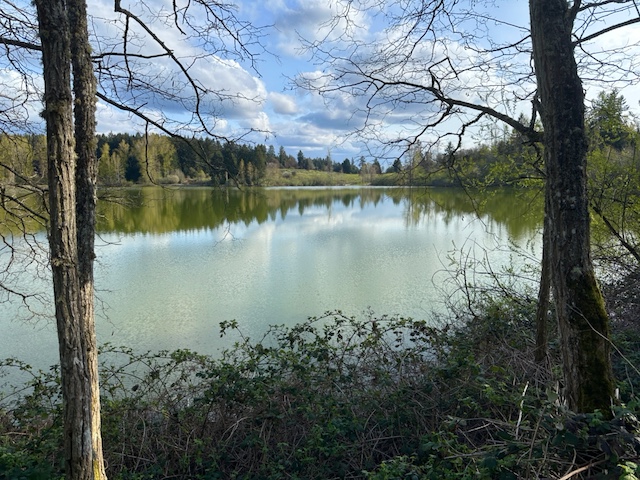
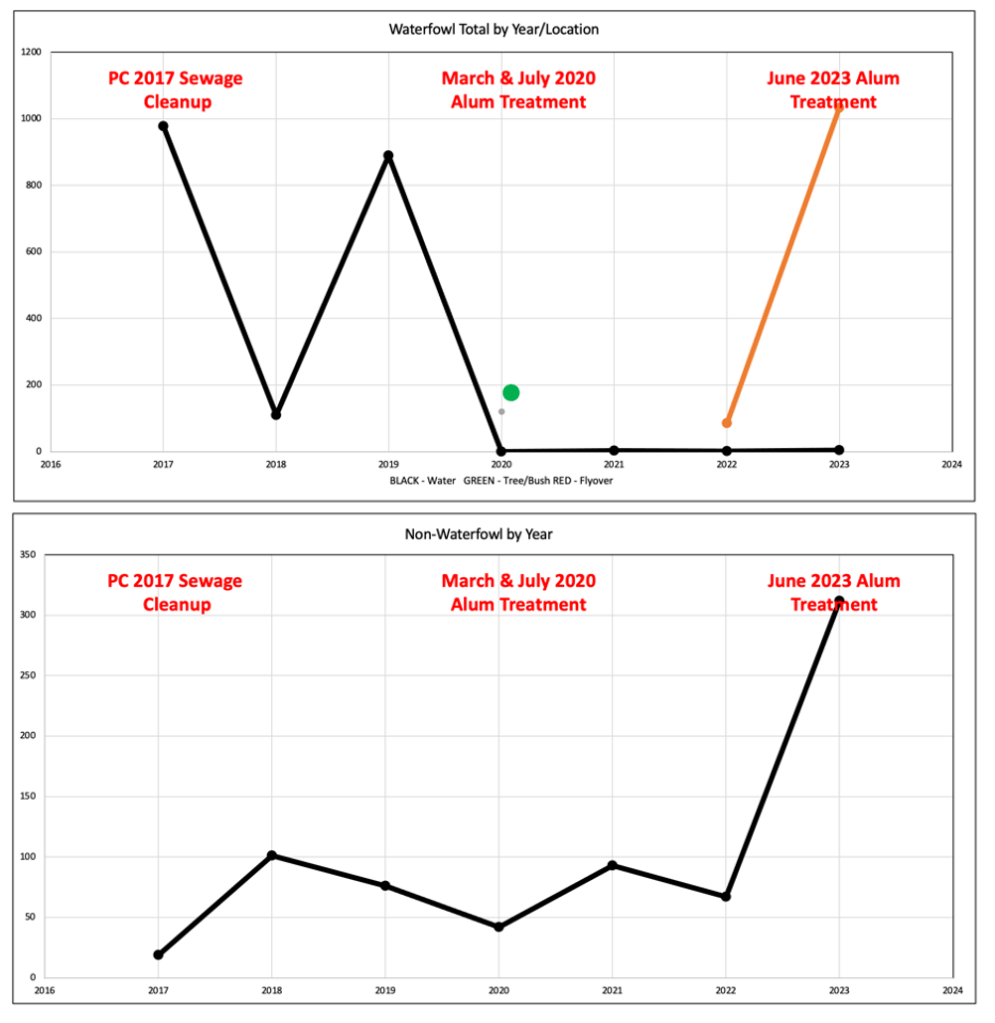
Most lakes and some creeks experience seasonal fluctuation in water depth due to changes in groundwater levels, yet these are not publicly documented or responded to. Additionally, occurrences of algae blooms have increased yet often gone untreated. A telling example is the city’s action to control algae, partly due to sewage leaks from Pierce College in Waughop Lake with repeated and expensive alum treatments that obliterated food sources and habitats that thrive in the benthic layer of lake zones. The alum treatment strategy was implemented against the recommendations of environmental groups, experts, and educated citizens who offered less expensive options that would not destroy the living lake habitat. Since the treatments, there have been no algae blooms, but there have also been limited bird visitations (except for drinking; see charts below), no bottom plant life, and no sign of invertebrates. Rather than improving the habitat, the treatments have destroyed it, eliminating food sources vital to wildlife.
There are two major and persistent issues with watershed health in Lakewood: water quality and quantity. Denigration of water quality is evident in algae blooms, rising levels of PFAS and 6PPD quinone (EPA now has enforceable standards for these forever chemicals), and other stormwater runoff pollutants such as nitrogen and phosphorus from fertilizers, and pet and yard waste. What can be done? Ironically, development increases impervious surfaces, increasing flow into stormwater drains that remove natural solutions to water runoff and pollution. Pervious surfaces – open spaces, yards, trees, and healthy soils – can absorb water and filter pollutants in the absorption process rather than follow unnatural flows through pipes attached to drains or flooding. This low-investment strategy could incentivize property owners and developers to focus more on landscaping and pervious, non-toxic, and non-polluting materials in buildings and renovations, thus improving water quality.
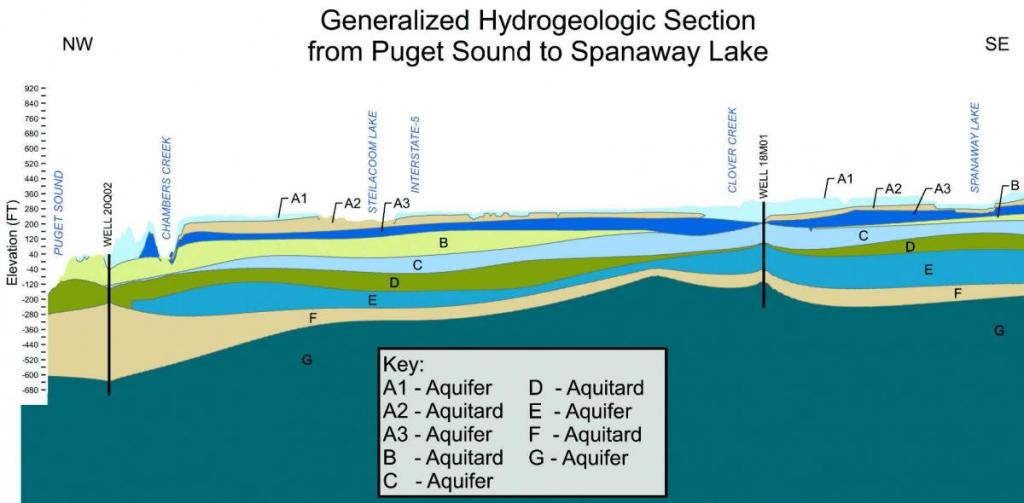
Water quantity is evident in several observable and not observable realities. We know some of our watershed creeks have been seasonally dry for the past five years, and lake levels have reached new lows. This is partly related to groundwater issues in our sole-source aquifer, where Lakewood primarily relies (see image).
Increased multi-family homes, large storage complexes, removal of mature trees, and focus on urban density contribute to water quantity challenges. Stormwater runoff is not captured for re-purposing, nor is it re-directed for non-human use, which increases demand on human water supply. Urban density increases building footprints, including parking lots and expanded or new transportation byways. What can be done? Designate distributed and long-term open spaces with native plants dedicated to aquifer recharge that will increase groundwater while actively removing pollutants through plants (such as carbon sequestration) and soil absorption. Municipalities should strategically plan for stormwater reuse in short- and long-term plans (there are funding sources from the EPA and WA State) as development continues to stress natural resources and options.
The CCWC suggests the following priorities for the City of Lakewood.
- Improve oversight of and management of groundwater withdrawals and recharges. This includes water levels and flows throughout the city, and share data with the County and other municipalities.
- Improve sustainable management of stormwater, including retrofits.
- Protect water bodies (e.g., wetlands) and federally mapped groundwater recharge areas (e.g., open spaces) from development.
- Consult with Lakewood Water District and Pierce County to use the USGS MODFLOW 6 model to determine steps that could be taken to improve creek flow.
- Monitor and resolve seasonal creek flows. Local governments must monitor and improve creeks with intermittent flow patterns by Washington State law.
- Monitor creek- and lake-side property that is privately owned. A shoreline management plan cannot be enacted without active and documented surveying of the city’s shoreline.
- Follow, implement, document, and evaluate actions directed by the 2019 Shoreline Management Plan with the cooperation of the CCWC. The plan should be updated annually.
- Educate, engage, and involve Lakewood residents and businesses in water quality and quantity improvements—partner with Pierce Conservation District and the CCWC for strategies and actions.
- Accept that municipality boundaries do not define watersheds. Thus, Lakewood must work with other watershed stakeholders in the larger watershed.
- Ensure that Lakewood city staff attend CCWC meetings and provide updates on City activities.
 cloverchamberscreekwatershedcouncil.blog