The Chambers-Clover Creek Watershed has five Major lakes: American, Spanaway, Steilacoom, Gravelly, and Tule. Some lakes in the watershed are kettle lakes, formed through glaciation with no stream inflow and relying on stormwater. We have nine major streams: Chambers, Clover, Spanaway, Morey, Murray, Flett, Leach, Puget, and Peach. In this post, we focus on Steilacoom Lake, unique among the watershed lakes in that it was formed through human manipulation and has a rich history.
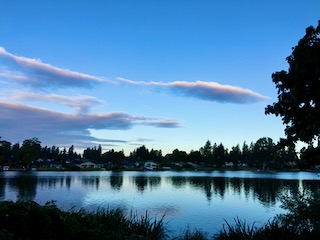
Before and during early development, the Western Pierce County area appealed to native people and settlers for the native prairies and access to creeks and lakes. In the mid-1800s, Fort Steilacoom was built, and with increased population, inhabitants manipulated waterways to better use natural resources, including fish hatcheries and mills. At this time, the American, Waughop, and Gravelly lakes were of note. Through settlement and agricultural development, watershed changes included the redirection of tributary creeks: Clover Creek and Ponce de Leon Creek in particular. The Steilacoom Lake area was originally a pond with surrounding wetland until expansions began with dams and the removal of trees, the trunks of which still must be navigated by boaters.
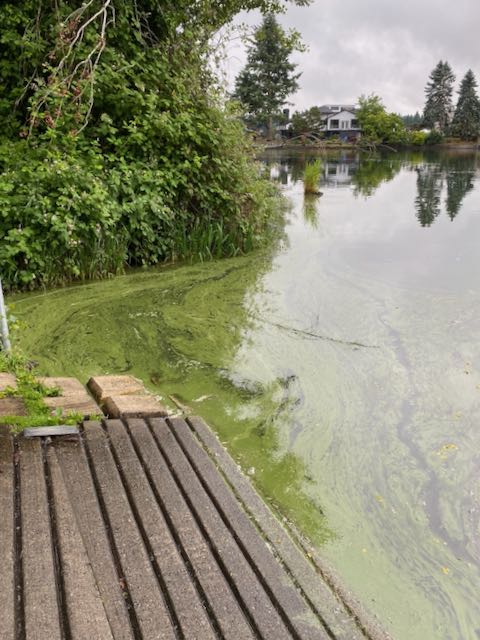
With urbanization, many stresses pose a threat to the health of the Lake. For example, Clover Creek, a primary tributary to the Lake, has run dry for the past five summers, lowering lake levels.
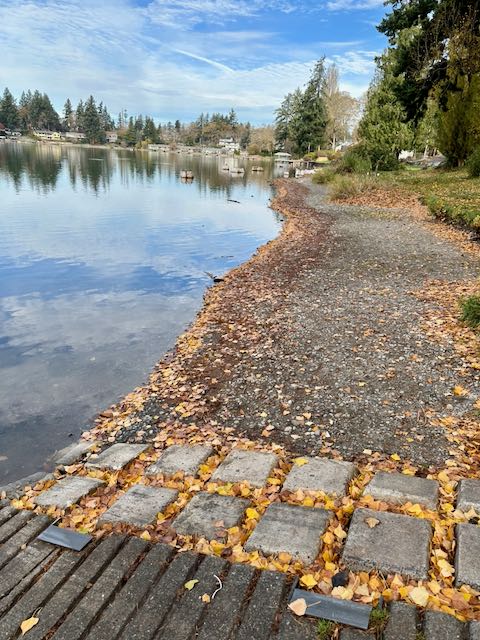
The CCW Council offers the following to help homeowners and recreational users prevent problems and keep the Lake safe for people and wildlife.
| Environmental Stresses | Steps We Can Take |
| Toxic Cyanobacteria and Algae Blooms – Caused by increased phosphorous and nitrogen from upstream pollutants, property fertilizers, and human/animal waste. Toxic blooms threaten humans, pets, and wildlife; see TPCHD information. | Make sure fertilizers do not run into standing water. Dispose of animal waste appropriately. Monitor stormwater or other water leaks flowing into the Lake.TPCHD does not monitor Steilacoom, but you can form an Algae Watch Volunteer Group by contacting ltuttle@tpchd.org. Report blooms to Lizbeth Seebacher of the WA State Freshwater Algae Bloom Monitoring program |
| Shoreline Riparian Area and Armoring – Much of the lakeside buffer in a property is a crucial area for waterway health. Protecting the integrity of your shoreline can help to prevent lake stressors. Armoring shorelines often involves using manmade materials that can contain erosion but encourage runoff from property, including pesticides, pet waste, and fertilizer, which can impact water quality. | Native plants improve the lake ecosystem by attracting and protecting wildlife. Consider creating a “soft” shoreline with natural materials (such as stone rather than cement) and buffers; see https://www.flickr.com/photos/ecologywa/albums/72157709388189776/with/48717736952 Trees can armor shorelines by naturally preventing erosion. They provide shade, keep water temperature down, and encourage water quality and habitat. |
| Limited Public Access – The sole public access and boat ramp is Edgewater Park, which has a proposed expansion that includes more recreational activities, parking, and lake use. | Help the City ensure recreational users are aware of the environmental challenges of algae blooms and water safety. Monitor and participate in public input as the Edgewater expansion begins. Document changes you observe as an impact from the development; share with the City and the CCWC. |
| Unmonitored Water Quality and Flow – Until 2021, there was volunteer water monitoring in Lakewood. Currently, there is no official reporting of water level changes or flow, nor is water quality tested unless a problem is reported. Stormwater can flush surface pollutants, including oil slicks, into the Lake. | Volunteer to monitor your lake levels. As of June 2024, concerns about flooding, drainage obstructions, and water pollution to the City of Lakewood Public Works, by contacting Westin Ott, City Engineer, (253) 983-7725 or wott@cityoflakewood.us. |
| Increased Development Impacting Water Flow – Impervious surfaces and buildings requiring new/expanded utilities impact tributary creeks. For example, the proposed apartment complex replacing Town Center Barnes and Noble may impact stormwater management, the headwaters of Ponce de Leon Creek, and sewage management. | Monitor development and speak to the City of Lakewood Planning Commission and City Council Members when waterways are stressed. As of June 2024, the City of Lakewood was reorganizing city public works. At this time, report lake issues to Jeff Rimack,Director, Planning and Public Works Department, for concerns about the Lake at jrimack@cityoflakewood.us or 253-983-7739. |
Additional Information and Resources
Chambers-Clover Creek Watershed Council (CCWC- https://www.piercecountywa.gov/1860/Chambers—Clover-Watershed-Council
CCWC Blog – https://cloverchamberscreekwatershedcouncil.blog
City of Lakewood Stormwater Management Action Plan: Receiving Water Conditions (2022)
Lake Steilacoom Improvement Club – https://lakesteilacoom.com
Pierce Conservation District: An Introduction to Lakes – https://www.piercecountywa.gov/DocumentCenter/View/96856/Lakes-101
Tacoma-Pierce Health Department Toxic Algae – https://tpchd.org/healthy-places/surface-water-quality/toxic-algae/
 cloverchamberscreekwatershedcouncil.blog