The current U.S. drought prediction suggests Western Washington may have a dryer summer ahead with less rain and more stress on plants. It may be easier to keep lawns and bed plants healthy during a few months of dry weather, but a drought can have long-term impacts on a tree. Trees impact the health of our environment and our watershed overall; they also benefit everyone in surprising ways. The following information can help you plan and use practical strategies to help your trees through the summer.
Preparing for drought
- Plants native plants. They are more adaptable to climate variations.
- Reduce competition for plants. Consider where plants are located and the type of water they need; see Washington State University Master Gardener’s list of Drought Tolerant Perennials & Groundcovers.
- Trees require much more water and deeper watering than lawns. When possible, replace lawns with understory shrubs and ground-cover plants that are more likely to allow water to filter into the ground and reach tree roots.
- Lawns can prevent watering from reaching trees. Unaerated lawns can create a thatch that may be impenetrable. Frequent top watering can discourage a deeper root system, requiring more watering in dry months. During the summer, cutting higher (2- 2.5 inches ) encourages deeper roots, improving heat and drought tolerance. Aerate your lawn during the cooler months.

Specific guidelines
- Water in the early morning or evening. It prevents evaporation. Water droplets on plants can act as a magnifier and burn the plant.
- Most tree watering should be at the edge of the tree canopy, called the drip line. Mulch should never touch the trunk; 3-5” of mulch around the tree can help retain water and facilitate absorption. Water slowly to avoid runoff and measure how deep the water is soaking. Some arborists recommend watering for 20-30 minutes and then shutting off for an hour before resuming. This allows the softening soil to hold the second watering better.
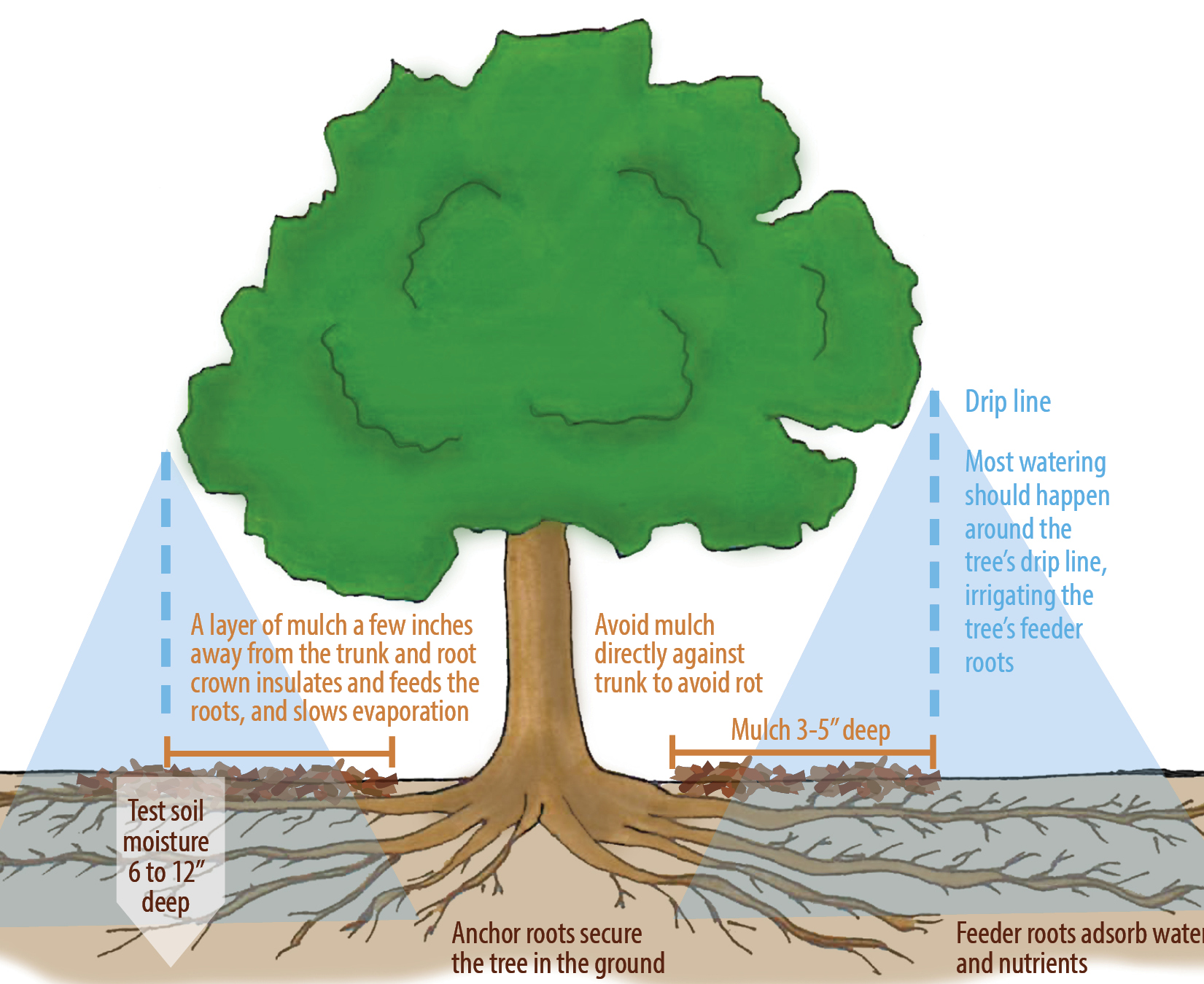
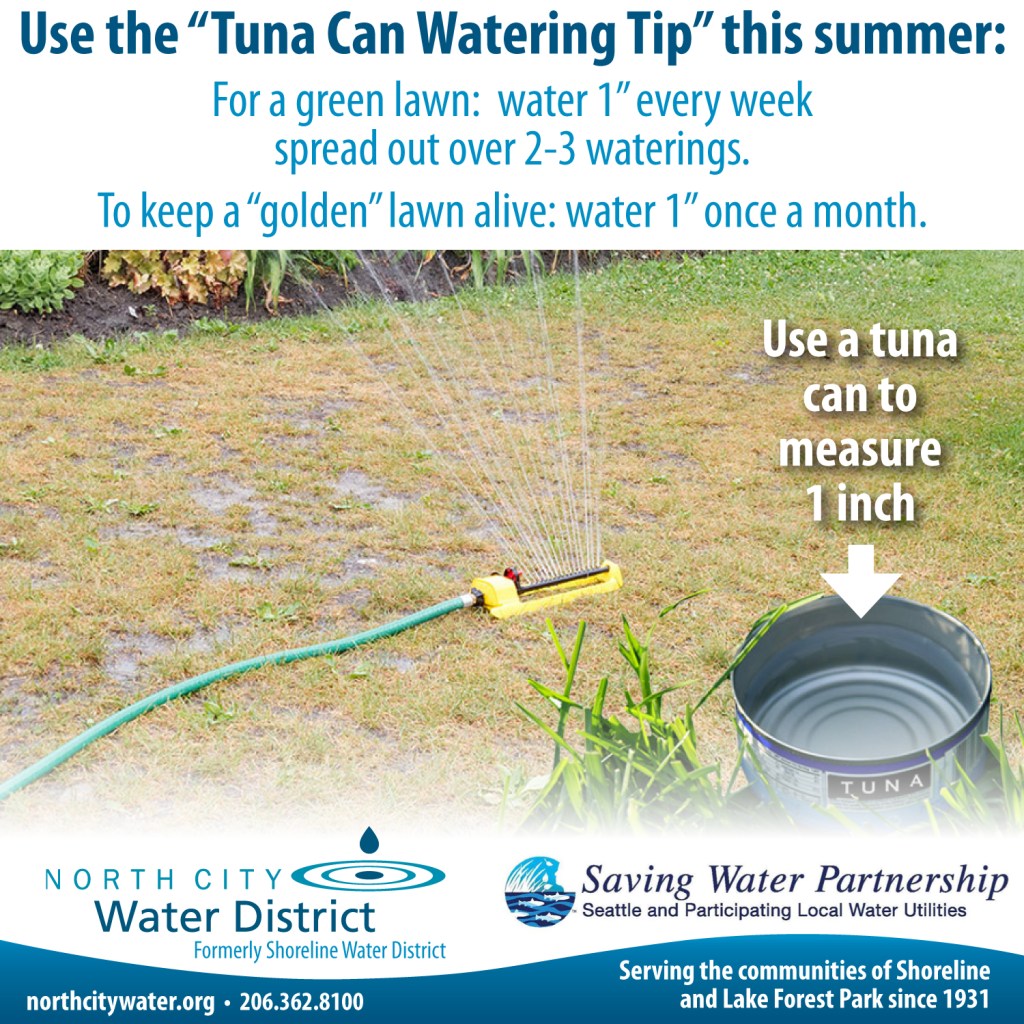
- Water deeply and slowly. Best to water weekly or bi-weekly for a longer period than daily for a short period. A general estimate is 1” of water or 10 gallons per inch of trunk diameter is needed. Place a small shallow can – tuna or pet food – in your yard or along the tree drip line to test how long it takes to water. Once the can has 1” of water, it determines how long it will take to water that amount to roots. NOTE: This is not useful if you are not watering slowly.
Other Water-Saving Tips
- Install a rain barrel to help with watering. Plants prefer and benefit from rainwater.
- Aerate your lawn at least once a year by punching holes about six inches apart to allow water to reach the roots rather than run off the surface.
- Don’t over-water your plants. Learn how much water they need and how best to apply the right amount. Before watering, use a trowel, shovel, or soil probe to examine soil moisture depth. If the top two or three inches of soil are dry, it’s time to water.
- Use minimal organic or slow-release fertilizer to encourage a healthy and drought-resistant landscape.
- Avoid trimming lower branches on trees and shrubs so that some leaf litter will accumulate, acting as a natural mulch.
- Remove weeds from your garden beds- this helps reduce excess water consumption due to plant competition.
- Water your shaded areas about 30 percent less than sunny areas. Consistently shaded areas create a microclimate of cooler temperatures and lower evaporation; thus, plants need less water.
- Consider creating “islands” of plant groupings to reduce lawns.
Resources
 cloverchamberscreekwatershedcouncil.blog